THE HOUSE I BOUGHT FOR MY MOTHER
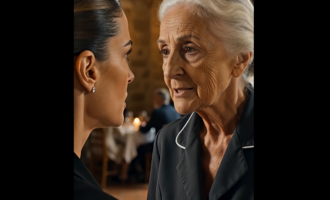
After six years away, I came home and found my mother on her knees, scrubbing the marble floor of the house I had bought for her. My brother stepped over her hand and said, “You missed a spot.”
PART 1: THE WOMAN ON THE FLOOR
The first thing I saw when I came home after six years was my mother on her knees, scrubbing red wine from the marble floor of the house I had bought for her.
The second was my brother stepping over her hand and saying, “You missed a spot.”
For three seconds, I couldn’t breathe.
My suitcase stood behind me in the foyer, still tagged from the airport. I had been in the country less than two hours.
Mom had once been impossible to miss.
Bright scarves.
Red lipstick.
Cinnamon perfume.
A laugh that carried through three rooms and made strangers smile even when they didn’t know what she was laughing about.
Now she looked twenty years older than sixty-eight.
Her gray hair was thin and loosely tied at the back of her neck. Her shoulders curved inward. A faded beige housekeeping dress hung from her body, too large around the waist and too short at the wrists.
That was how I saw the bruises.
Three dark marks above her left hand.
My stomach tightened.
“Mom?”
She stopped scrubbing.
Slowly, she looked up.
There are moments your mind refuses to accept even while they are happening.
I knew her eyes.
Warm brown.
A little darker around the edges.
They were the same eyes that had watched me leave for college, watched me bury my father, watched me board the plane for my first international contract.
But they looked through me.
Not at me.
Through me.
“I’m sorry,” she whispered.
I waited.
Her fingers tightened around the wet rag.
“Guests aren’t supposed to use this entrance.”
Something cold moved through my chest.
“Mom.”
She lowered her head.
“The floor isn’t dry.”
“It’s me.”
She kept scrubbing.
I crouched beside her.
“Mom, look at me.”
She hesitated, then obeyed.
“It’s Jessi.”
Her expression changed.
For one fragile second, I thought she knew me.
Then she shook her head.
“No.”
I felt the word physically.
“No?”
“Jessi lives far away.”
“I came home.”
“She’s busy.”
My throat closed.
Behind us, someone laughed softly.
Not cruelly.
Almost awkwardly.
I turned.
My brother stood halfway down the staircase.
Luca.
Forty years old now.
Still handsome.
Still capable of making himself look relaxed when he was anything but.
He wore a dark blue robe embroidered with our father’s initials.
I knew that robe.
I had bought it for Dad the Christmas before he died.
Mom had kept it folded in a cedar chest because she said it still smelled faintly like his aftershave.
Luca froze when he saw me.
“Jessi?”
I stood.
His hand tightened around the banister.
Then, just as quickly, he recovered.
Luca had always been good at recovering.
At fourteen, he broke Mom’s favorite lamp and somehow convinced her I had knocked it over while vacuuming a room I hadn’t entered.
At twenty-two, he missed three months of rent and told Dad his employer had messed up payroll.
At thirty-five, he borrowed money from me and called it an investment.
He smiled.
“Wow.”
I stared at him.
“The international superstar finally remembers she has a family.”
“I called.”
“Once every few months.”
“I sent ten thousand dollars every month.”
His smile tightened.
That amount mattered.
Six years earlier, when my work moved overseas, I had bought this house for Mom.
Not as an investment.
Not as a status symbol.
For her.
Dad had been gone three years, and Mom had spent most of her life worrying about money. She raised us during years when our father’s construction business rose and fell with the economy.
When I finally reached a point where money stopped being an emergency, I wanted her to have one thing she had never had.
Security.
The deed remained in my name because my attorney recommended it, but Mom had lifetime occupancy rights.
As far as I was concerned, it was her home.
I also transferred ten thousand dollars every month into an account intended to cover utilities, maintenance, food, household help, insurance, and anything Mom needed.
Luca lived nearby then.
Eventually, he started helping her.
Then he and Wendy moved in “temporarily” after a renovation problem at their apartment.
That was four years ago.
Every time I asked when they were leaving, Luca said Mom liked the company.
Every time I asked Mom, Luca seemed to have a reason she couldn’t come to the phone.
She was napping.
At lunch.
At the doctor.
In the shower.
Already asleep.
I had believed him.
That fact suddenly felt unbearable.
Footsteps sounded upstairs.
A woman appeared.
Wendy.
Luca’s wife.
She wore an ivory silk outfit that probably cost more than Mom’s entire wardrobe.
Her platinum-blonde hair was cut into a sleek bob. Gold earrings framed a face that looked more irritated than surprised.
She held a crystal mimosa.
It wasn’t even eleven-thirty.
“You should’ve told us you were coming,” she said.
I looked at her.
“Why?”
“The guest suite isn’t ready.”
“The guest suite?”
“We’ve been using it.”
“For what?”
She took a sip.
“Storage.”
I looked back at Mom.
She was still kneeling.
Still cleaning.
“Why is my mother dressed like that?”
Luca came down the final steps.
“Here we go.”
“What does that mean?”
“It means you’ve been here five minutes.”
“And?”
“And Mom likes helping.”
I glanced down at the apron.
“Helping.”
“Yes.”
“With what?”
“Little things.”
“She’s on her knees cleaning your wine.”
“That’s not my wine.”
Mom’s hand stopped.
Only for half a second.
Then she began scrubbing faster.
I noticed.
Luca noticed me noticing.
Wendy stepped forward.
“She spilled it earlier.”
I looked at Mom.
“Did you?”
She said nothing.
“Mom?”
Luca sighed.
“She gets confused.”
I stood slowly.
“What happened to her wrists?”
Mom immediately tugged down her sleeves.
Wendy answered.
“She bruises easily.”
“Both wrists?”
“She bumps into furniture.”
I stared at her long enough that her expression changed.
Then Mom whispered, “I’m sorry.”
I looked down.
“For what?”
“The stain.”
“You didn’t do anything.”
Her eyes widened.
Then she glanced at Wendy.
That look told me more than anything else had.
Fear.
Not panic.
Not terror.
Something quieter.
The kind of fear that becomes routine.
I bent to take the rag.
Mom gripped it with both hands.
“Please.”
“Mom, give it to me.”
“Mrs. Wendy gets upset if it stains.”
The entire foyer went still.
Wendy’s lips parted.
Luca immediately stepped in.
“She doesn’t know what she’s saying.”
I turned to him.
“What exactly does she not know?”
“Sometimes she mixes things up.”
“Where does she sleep?”
His expression changed.
“Why?”
“Show me.”
“Jessi.”
“Where does she sleep?”
He exhaled.
“Downstairs.”
The downstairs guest bedroom was large, bright, and opened toward the garden.
I started toward it.
Wendy moved first.
“That isn’t her room.”
I stopped.
“What?”
“She wanted something closer to the kitchen.”
The cold feeling in my stomach returned.
“Show me.”
No one moved.
So I walked.
The house had six bedrooms, an elevator, two offices, three living areas, and more space than Mom had ever wanted.
I found her room beside the service entrance.
It had been designed as a large laundry and utility room.
A narrow bed stood between a cabinet of detergent and a freezer.
Three beige housekeeping dresses hung from wall hooks.
Her shoes were lined neatly underneath.
There were no photographs.
No books.
No bright scarves.
No perfume.
No television.
I turned.
Luca stood in the doorway.
“She wanted to be downstairs.”
“Why?”
“She fell.”
“The house has an elevator.”
“She doesn’t like using it.”
“There is a downstairs bedroom.”
Wendy appeared behind him.
“I use that.”
“For what?”
“Work.”
I walked past them.
The guest bedroom contained clothing racks.
Designer shoes.
A makeup table.
A chaise lounge covered in shopping bags.
There was no desk.
No paperwork.
No computer.
I turned back toward Wendy.
She crossed her arms.
“It works better for everyone.”
“For everyone except my mother.”
Luca stepped between us.
“Don’t do this.”
“Do what?”
“Come in here after six years and judge everything.”
“I’m trying to understand what I’m looking at.”
“You’re looking at the people who actually stayed.”
The sentence hit exactly where he wanted it to.
Because it was true.
I had left.
At first for two years.
Then another contract came.
Then another.
My career became bigger than I had ever expected.
I traveled between cities so often that airports began feeling more familiar than homes.
I sent money.
I paid for repairs.
I asked questions.
I convinced myself that because I could provide, I was participating.
I wasn’t.
But guilt did not explain the uniform.
It did not explain Mom’s fear.
It did not explain why she believed I was too busy to come home.
“Where is her phone?”
Luca looked away.
“She kept losing it.”
“So where is it?”
“I took it.”
“You took her phone.”
“For safety.”
“What danger was the phone causing?”
“She called people at strange hours.”
“Did she call me?”
Silence.
“Luca.”
“I don’t remember.”
A lie.
I knew it instantly.
His voice had the same careful flatness it had when we were kids.
“Did she call me?”
He shrugged.
“Maybe.”
“And?”
“You were working.”
“That wasn’t your decision to make.”
“You weren’t here.”
The words landed again.
I let them.
Then I picked up my phone.
Luca stared.
“Who are you calling?”
“My attorney.”
He laughed once.
“You’ve been home twenty minutes and you’re calling a lawyer?”
“Yes.”
“Jessi, seriously.”
I dialed.
Daniel Mercer answered on the third ring.
Daniel had handled the purchase of the house six years earlier.
“Jessi?”
“Hi, Daniel.”
There was a pause.
“You’re back?”
“I’m standing inside Oakridge.”
His tone shifted.
“Is everything all right?”
“No.”
Luca’s face tightened.
“I need you to confirm something for me.”
“What?”
I looked directly at my brother.
“Whose name is on the deed?”
Luca stopped moving.
Daniel answered immediately.
“Yours. Sole owner. Your mother has lifetime occupancy rights, exactly as you requested.”
Wendy slowly lowered her glass.
Luca stepped toward me.
“Don’t start something stupid.”
I ignored him.
“Good. Send me the complete household account history.”
“How far back?”
“Six years.”
“Jessi—”
“And tell me what I need to do to remove anyone from this property who isn’t my mother.”
Wendy sat down.
Luca’s face went pale, then red.
“This is our home.”
“No.”
I looked toward Mom’s narrow bed.
“It’s not.”
Daniel was silent.
Then he said, “Jessi, before we talk about removing anyone, there’s something you need to know.”
A new kind of fear moved through me.
“What?”
“I assumed your family had told you.”
“Told me what?”
“Your brother filed a petition eight months ago asking to become your mother’s legal guardian.”
I looked at Luca.
He didn’t deny it.
And suddenly the laundry room, the missing phone, the clothes in storage, the isolation—none of it looked accidental anymore.
My brother hadn’t simply started living like the owner.
He had been preparing to make sure nobody could challenge him.
Not even Mom.
PART 2: WHAT LUCA HAD TAKEN
“Put him on speaker.”
Luca immediately said, “No.”
I pressed the button anyway.
Daniel’s voice filled the room.
“What exactly did Luca ask for?” I said.
“A guardianship order granting him authority over your mother’s major personal and financial decisions.”
Mom sat on the edge of the bed, hands folded tightly in her lap.
I looked at my brother.
“You tried to have her declared incapable?”
“That isn’t what guardianship means.”
“Then explain it.”
Luca’s expression hardened.
“I’ve been taking care of her.”
“By making her clean?”
“Stop saying that.”
“Why?”
“Because you don’t know anything about what it’s been like.”
Wendy crossed her arms.
“Someone had to stay.”
There it was again.
Stay.
The word they were going to use like a weapon every time I asked a question.
I was beginning to understand why.
Because it worked.
The guilt came instantly.
I had not seen Mom in person in six years.
That was indefensible.
But even guilt has limits.
It can explain why I missed something.
It cannot turn someone else’s choices into permission.
I asked Daniel, “When was Mom evaluated?”
“Eleven months ago.”
Luca looked toward the hallway.
I remembered that appointment.
I had been in an airport in Madrid when Luca called afterward.
“How did it go?” I had asked.
“Fine,” he said.
“Fine?”
“Normal aging. She’s forgetful. Nothing dramatic.”
I had offered to come home.
Not immediately.
That was the part I hated remembering.
I said, “If you need me, I can rearrange the end of the month.”
Luca laughed.
“For what? She’s fine.”
So I stayed.
Another project.
Another plane.
Another excuse.
Now I looked at him.
“You told me the evaluation was normal.”
“I said she was declining.”
“No. You said normal aging.”
“It changed.”
“Then why didn’t you tell me?”
“I tried.”
“You asked me for money.”
“Because her care costs money.”
“How much?”
He frowned.
“What?”
“How much did her care cost last month?”
“Why?”
“Because I sent ten thousand dollars.”
“That covers the household.”
“The household was supposed to be Mom.”
“We live here too.”
“That was supposed to be temporary.”
Luca laughed.
“Four years ago.”
“I know how long it’s been.”
“Do you?”
I let that sit.
Then I turned to Mom.
“Where are your clothes?”
She looked confused.
“My clothes?”
“The scarves.”
She touched her collar.
“Gone.”
“Where?”
Luca said, “Stored.”
“Where?”
“Garage.”
I walked away before he could stop me.
The garage held two vehicles I had never seen.
A black luxury SUV.
A silver sports coupe.
I stopped.
“New?”
Luca followed me.
“They’re financed.”
“With what?”
“My job.”
Luca worked in property management.
He made decent money.
But six months earlier, he had told me business was bad.
I knew because he used it as the reason I should send an additional eight thousand dollars for “house repairs.”
I never asked to see receipts.
I hated myself for that now.
I opened the storage cabinets.
Plastic bins were stacked three high.
MOM—BOOKS.
MOM—PHOTOS.
MOM—KITCHEN.
DAD.
SCARVES.
I pulled down the last one.
Inside were forty years of my mother.
Silk.
Cotton.
Patterns.
Flowers.
Colors so bright they seemed almost inappropriate in that sterile garage.
I carried the box inside.
Mom stared at it.
I held up a red scarf.
“You remember this?”
She reached toward it.
“I had one like that.”
“It’s yours.”
Her fingers touched the fabric.
“I used to wear red.”
“Everywhere.”
She smiled faintly.
“Your father hated it.”
“He said you looked like a traffic light.”
Her mouth twitched.
For one second, I saw my mother.
Then the expression disappeared.
I looked at Luca.
His face was unreadable.
My phone buzzed.
Daniel had begun sending the household-account statements.
I opened the most recent year.
Mortgage-related expenses.
Utilities.
Insurance.
Groceries.
Then other things.
Country-club dues.
Spa charges.
Designer stores.
Restaurant bills.
A luxury gym membership.
Car payments.
I scrolled faster.
“What is this?”
Luca crossed his arms.
“Household expenses.”
“Mom belongs to a country club?”
“We’ve taken her.”
“When?”
“She doesn’t like going anymore.”
“Then why is she paying for it?”
“It isn’t her money.”
I looked up.
“What?”
“You send household funds.”
“For Mom.”
“For the house.”
“For Mom.”
“We maintain the house.”
“Does maintaining the house include Wendy’s $4,800 handbag?”
Wendy’s face went still.
Luca looked at her.
That glance answered the question before either spoke.
“It was an anniversary gift,” she said.
“From my mother?”
“From our money.”
I stared at her.
“What money?”
“Our household budget.”
“You don’t have a household budget with me.”
Her face hardened.
“You really think writing checks gives you moral superiority?”
“No.”
I stepped closer.
“I think writing checks gives me the right to know why the money I sent for my mother’s dental work bought you jewelry.”
Neither spoke.
I found the transfer.
Five thousand dollars extra.
Luca’s message was still on my phone.
Mom cracked a crown. Treatment is expensive.
The statement showed a jewelry purchase three days later.
No dentist.
No oral surgeon.
No pharmacy.
I turned to Mom.
“Did you get a crown repaired last year?”
She touched her mouth.
“No.”
Luca snapped, “She doesn’t remember.”
“Maybe.”
I looked back at him.
“Show me the dental bill.”
Silence.
That was the moment my anger became focused.
I stopped arguing.
I started collecting.
I took photographs of the laundry room.
The uniforms.
The storage bins.
The guest room Wendy had converted into a dressing room.
The account statements.
Luca watched me.
“You’re building a case.”
“I’m learning what happened.”
“You already decided.”
“No.”
That made him pause.
“I decided Mom isn’t cleaning another floor. Everything else depends on what I find.”
He laughed bitterly.
“You don’t know what she needs.”
“That’s why she’s getting an independent evaluation.”
His jaw tightened.
The guardianship hearing was the next morning.
Daniel told me Luca’s petition described Mom as unable to handle money, medication, appointments, or major personal decisions.
Some of that might be true.
She had not recognized me.
I was not going to turn her into a symbol and pretend she was fine just because the alternative was painful.
I wanted facts.
I returned to her room.
Her purse was beneath the bed.
There was no wallet.
No phone.
No credit cards.
“Where are these?”
“Luca keeps them.”
“Why?”
“I lose things.”
“When did you last buy something for yourself?”
She looked embarrassed.
“I don’t need much.”
“That wasn’t my question.”
She rubbed her hands together.
“I don’t remember.”
I opened a cardboard box beneath the bed.
Old birthday cards.
Dad’s broken watch.
Receipts.
A spiral notebook.
The first pages were normal.
Milk.
Bread.
Call Carol.
Doctor Thursday.
Then the handwriting became shakier.
March 12: Luca says Jessi stopped sending money.
I stopped breathing.
April 4: Wendy says heat upstairs costs too much.
May 19: Asked to call Jessi. Luca says number changed.
June 2: Forgot pills. Wendy angry.
June 17: Cleaned dining room twice. Still wrong.
July 8: Asked about scarves. Boxes gone.
July 22: Luca says house belongs to him now because Jessi doesn’t want it.
I read the final sentence twice.
Then I looked toward the doorway.
Luca stood there.
“Did you tell her I gave you this house?”
He shook his head.
“She misunderstood.”
“Did you say it belonged to you?”
“I said I manage it.”
“She wrote something different.”
“She is cognitively impaired, Jessi.”
Mom lowered her eyes.
My voice changed.
“Do not use her diagnosis every time she contradicts you.”
His mouth tightened.
“You weren’t here.”
“Stop.”
The word surprised both of us.
“I know I wasn’t here.”
He said nothing.
“I know exactly how long I stayed away.”
I held up the notebook.
“But my absence does not make every sentence you dislike a symptom.”
Mom looked up.
Her gaze moved over my face.
She frowned.
Then said, “Jessi had shorter hair.”
I stopped.
“I did.”
“When she left.”
“Yes.”
“She cut it because she thought long hair made her look too young at work.”
A sound escaped me.
Half laugh.
Half sob.
“Mom.”
She stared harder.
“You cried at the airport.”
I covered my mouth.
Only Mom knew.
I had gone into the bathroom before security because I didn’t want her to see.
“You pretended you didn’t notice.”
She blinked.
“You had mascara on your sleeve.”
My eyes filled.
“Yeah.”
For a moment she knew me.
Completely.
Her face softened.
“Baby girl.”
I reached for her.
Then confusion returned.
She pulled back.
The loss happened in front of me.
I almost couldn’t bear it.
My phone rang.
Daniel.
“The hearing is confirmed for ten tomorrow morning.”
“Can we stop it?”
“I filed an objection.”
“What else?”
“I’m reviewing the physician’s report.”
“And?”
“The version attached to Luca’s petition is incomplete.”
I looked at my brother.
“What’s missing?”
“I’m trying to obtain the original.”
Luca turned away.
His reaction was tiny.
But I saw it.
Fear.
Real fear.
And for the first time, I knew there was something inside that guardianship application my brother desperately did not want me to read.
PART 3: THE LETTER THAT NEVER REACHED ME
I stayed downstairs with Mom that night.
Luca and Wendy went upstairs after Daniel filed the objection.
Nobody said goodnight.
That felt appropriate.
At eleven, Mom started clearing cups from the kitchen.
I stopped her.
“You don’t have to do that.”
She looked confused.
“They’ll be upset.”
“Who?”
Her eyes moved toward the ceiling.
I took the cup from her hands.
“They can be upset.”
“But the kitchen.”
“Can survive until morning.”
She watched me place the cup back on the counter.
Then she whispered, “I don’t know what I’m supposed to do.”
That sentence hurt more than everything else.
“What do you want to do?”
She looked startled.
“What?”
“Right now.”
“I don’t know.”
“Tea?”
Her eyes softened.
“Tea.”
So we made tea.
I found cinnamon in the pantry.
The smell filled the kitchen.
Mom closed her eyes.
“I used to put that in coffee.”
“You did.”
“Your father hated it.”
“He complained and drank it anyway.”
A small laugh.
Then she looked at me.
“You remember a lot.”
“I remember you.”
She didn’t answer.
I went through six years of messages.
At first, there were hundreds of photographs.
Mom gardening.
Mom baking.
Mom holding Christmas decorations.
Mom standing beside the new rose bushes.
Then the photographs changed.
Fewer close-ups.
More distance.
Always long sleeves.
Always seated.
Always Luca or Wendy nearby.
I asked myself how I had missed it.
The answer was ugly.
Because I wanted to believe everything was fine.
Concern requires action.
Reassurance allows delay.
Every time Luca said Mom was fine, I let myself accept it because the alternative meant confronting my choices.
I had built a life thousands of miles away and convinced myself I could manage home from a screen.
Luca exploited that.
But I made it possible.
At 1:17 a.m., Daniel called.
“I have the original evaluation.”
I stood.
“And?”
“Your mother has documented cognitive impairment.”
I closed my eyes.
“Okay.”
“There were concerns about medication management, memory, and disorientation.”
I gripped the counter.
“That part is real.”
“Yes.”
“Anything else?”
“Yes.”
His tone changed.
“The physician specifically wrote that your mother remains capable of expressing preferences and participating in major personal decisions with appropriate support.”
I opened my eyes.
“That wasn’t in the filed copy?”
“No.”
“What else?”
“The physician recommends maintaining familiar social contact and encouraging autonomy wherever safely possible.”
I looked toward Mom.
No phone.
No friends.
No decisions.
No access to her own money.
“Was that section removed?”
“The filed version ends before it.”
“Accidentally?”
“I can’t tell you intent yet.”
“What do you think?”
Daniel was careful.
“I think we should show the court both versions.”
That was Daniel’s way of answering.
I sat beside Mom.
“Do you remember this doctor?”
I gave her the name.
She frowned.
“Nice glasses.”
I almost laughed.
“Yes.”
“I didn’t like the questions.”
“What kind?”
“Remembering words.”
“Did Luca come?”
“Yes.”
“Wendy?”
“No.”
“Did the doctor tell you that you could still make decisions?”
She looked confused.
“I don’t know.”
“Did Luca tell you?”
“No.”
Of course he hadn’t.
I kept searching.
Then I found another message.
Seven months earlier.
From Mom’s number.
Don’t call tonight sweetheart. Very tired. Love you.
I stared at it.
Something felt wrong.
Mom did not call me sweetheart in texts.
Never.
She called me Jess.
Or baby girl.
Sometimes just J.
I turned the screen toward her.
“Did you send this?”
She squinted.
“I don’t type like that.”
My stomach twisted.
“Who had your phone?”
“Luca.”
I scrolled.
There were more.
I’m okay.
Don’t worry.
Busy today.
Feeling tired.
Short replies.
Always when I asked to speak.
Always after Mom’s real calls had apparently become difficult.
Luca hadn’t simply prevented communication.
He had replaced it.
I had been having conversations with my brother while believing they were with my mother.
The realization made me physically sick.
I went to the utility room because I needed air.
While moving the cardboard box away from the bed, I heard something scrape underneath.
An envelope was taped to the bottom.
My name was written on it.
Jessi.
Mom’s handwriting.
I sat down before opening it.
Dear Jessi,
I don’t know if you are angry with me.
Luca says you have your own life now and I shouldn’t bother you.
I am trying to help around the house so I am not a burden.
Wendy needs the upstairs room, so I moved downstairs.
Please don’t worry.
I miss your voice.
I hope I did not do something that made you stop wanting me.
Love,
Mom.
I couldn’t finish the last line aloud.
I walked into the bathroom and shut the door.
Then I cried.
Quietly.
Not dramatically.
There was no energy for that.
I sat on the closed toilet seat with one hand over my mouth because Mom was twenty feet away and I did not want her hearing me fall apart.
I had spent six years believing she knew I loved her.
Believing money carried some part of me across the distance.
Believing Luca gave her every message.
Instead, my mother had lain beside a freezer wondering what she had done to make her daughter stop wanting her.
That guilt would stay with me.
I knew it immediately.
But guilt can do two things.
It can paralyze you.
Or it can tell you what you will never allow again.
When I came out, Mom was awake.
She saw the letter.
“I tried to mail that.”
“What happened?”
“Luca said stamps were expensive.”
The absurdity almost made me laugh.
“Mom, postage is less than a dollar.”
She shrugged weakly.
“He said you didn’t like letters.”
“I love your letters.”
Her eyes filled.
“He said you changed your number.”
“I never changed it.”
“He said you were busy.”
“I was.”
I swallowed.
“But not too busy for you.”
She looked away.
I could see how difficult it was to change a belief someone had repeated for months.
Then she whispered, “He said the money stopped.”
“What money?”
“The house.”
My body went cold.
“What did he tell you?”
“That you couldn’t send anymore.”
“I sent ten thousand every month.”
Her head snapped toward me.
“Every month?”
“Yes.”
“No.”
“Yes.”
“He said there wasn’t enough.”
“For what?”
She rubbed her hands.
“For me to stay.”
I stopped breathing.
“What?”
“He said I had to help.”
“With cleaning?”
She nodded.
“Laundry?”
Another nod.
“Guest rooms?”
“Yes.”
“Why?”
“So I’m useful.”
My entire body felt hot and cold at once.
I wanted to wake Luca and drag him downstairs.
Instead, I remembered Daniel.
Evidence.
Facts.
Control your anger long enough to use it.
“Mom, did anyone ever tell you that you could be removed from this house?”
“Luca said if it became too expensive, I might need someplace smaller.”
“Did he tell you the house belonged to him?”
“Yes.”
“Did you sign papers?”
She frowned.
“Some.”
My stomach dropped.
“What papers?”
“I don’t know.”
“When?”
“Spring.”
“Who gave them to you?”
“Luca.”
I called Daniel.
He listened without interrupting.
“She cannot sign over a house she doesn’t own,” he said.
I exhaled.
“But she could have signed financial authorizations, medical forms, or documents related to the guardianship.”
“Can you find them?”
“Yes.”
At seven the next morning, he did.
Mom had signed a limited authorization allowing Luca to help manage household payments.
It was legitimate.
It did not give him ownership.
It did not give him unrestricted authority.
But his guardianship filing described it as evidence that she had already entrusted him with broad financial management.
Another truth bent until it became something else.
When Luca entered the kitchen at eight, he wore a suit.
He looked tired.
“You’re still here.”
“It’s my house.”
He almost smiled.
“Right.”
I closed my laptop.
“Tell me what actually happened.”
His eyes narrowed.
“What do you mean?”
“I know Mom’s condition is real.”
That surprised him.
“I’m not going to pretend she’s perfectly healthy just because it helps me.”
He said nothing.
“You took her to appointments.”
“Yes.”
“You found her when she wandered.”
His face changed.
“Who told you?”
“You did.”
“I told you once.”
“You said she walked outside at night.”
He looked toward Mom.
“She was looking for Dad.”
Mom’s face fell.
I asked, “How far?”
“Three blocks.”
“Was she wearing shoes?”
“Slippers.”
Fear tightened my chest.
That mattered.
Luca saw it.
“You weren’t here for that.”
“No.”
“She left the stove on.”
“I know.”
“She missed medication.”
“I know.”
“I spent nights awake.”
“I believe you.”
That stopped him.
“You believe me?”
“Yes.”
He stared.
I continued.
“I believe caregiving became difficult.”
His face softened slightly.
“I believe you were overwhelmed.”
He looked away.
“I believe you resented me.”
His mouth tightened.
“And I understand why.”
Now he looked at me.
Then I said, “I also believe you used that resentment to justify things that had nothing to do with caregiving.”
The softness disappeared.
“You don’t know what it does to you.”
“Then why didn’t you ask me to come home?”
“I did.”
“No. You asked for money.”
“You always had a reason you couldn’t come.”
“That’s true.”
I let the shame land.
“But every time I asked if you needed me, you said no.”
He laughed.
“What was I supposed to say? Quit your life?”
“Yes.”
My answer surprised him.
“If it was that bad, yes.”
Silence.
“You should have said, ‘Your mother needs you.’”
I swallowed.
“I should have understood without being told. But you should have told me anyway.”
His face twisted.
“You escaped.”
There it was.
“You went to another country and became successful, and I stayed here fixing everybody else’s problems.”
“You chose to move into this house.”
“For Mom.”
“At first.”
He looked away.
“And then?”
No answer.
“You started spending the household money.”
“I deserved something.”
“Then ask me to pay you.”
“I shouldn’t have to ask.”
“That is exactly what adults do when money isn’t theirs.”
His jaw clenched.
“I lost work because of her.”
Mom stiffened.
I stepped closer.
“Don’t say that like she did it to you.”
He rubbed his forehead.
“I’m telling you how it felt.”
“And I’m telling you that feeling trapped does not make trapping someone else acceptable.”
Silence.
My phone buzzed.
Daniel.
The hearing would begin at ten.
He had one more piece of information.
The complete medical report had been emailed directly to Luca.
Both pages.
Eleven months earlier.
He had received the recommendation that Mom retain contact, autonomy, and participation in decisions.
Yet the court received only page one.
I looked at my brother.
He understood from my face that I knew.
For the first time since I came home, he seemed less like the powerful person in the house.
And more like a man standing beside a door that had finally opened behind him.
PART 4: THE DAY HE HAD TO ANSWER
Mom wore a blue cardigan to court.
I found it in one of the storage boxes.
She touched the pearl brooch on the collar and said, “Your father bought this.”
“For your fortieth anniversary.”
She smiled faintly.
“He complained about the price.”
“You picked it yourself.”
“I know.”
That was Mom.
She could remember a forty-year-old argument about jewelry and forget what she ate for breakfast.
Memory is cruel that way.
It does not leave in order.
Before we left, she asked, “Will Luca be angry?”
“He might be.”
“Maybe I shouldn’t go.”
“You don’t have to say anything you don’t want to.”
“What if I forget?”
“Then you forget.”
“What if I get something wrong?”
I crouched in front of her.
“This isn’t a test.”
She looked unconvinced.
“I’ll sit beside you.”
That was enough.
At the courthouse, Luca looked like the person everyone trusted.
Dark suit.
Clean shave.
Tired eyes.
A devoted son carrying an impossible burden.
That was part of what made the situation difficult.
Real harm rarely looks like a movie villain.
Most of it arrives dressed as necessity.
The hearing room was small.
A judge.
Lawyers.
Documents.
No dramatic audience.
No cheering.
Just a quiet room where my mother’s future would be discussed in careful legal language.
Luca’s attorney began.
He described Mom’s cognitive decline.
The nighttime wandering.
The stove.
Medication.
Bills.
Confusion.
Then he described Luca.
The son who stayed.
The son who rearranged his life.
The son who provided daily supervision while his sister built a career overseas.
Every accurate sentence felt like a knife.
Because none of it erased what came later.
But none of it was meaningless either.
I had to sit there and hear my failure described by someone I disliked.
That was part of the price of being honest.
Luca testified.
He was calm.
He said Mom needed consistency.
He said Wendy had helped.
He said their household had absorbed increasing responsibilities.
He said guardianship would allow him to keep doing what he had already been doing.
Then Daniel stood.
“Mr. Marino, who owns the Oakridge residence?”
Luca hesitated.
“My sister.”
“Does your mother have recorded lifetime occupancy rights?”
“Yes.”
“Did you ever tell your mother the property belonged to you?”
“No.”
Daniel placed Mom’s notebook before him.
“Do you recognize her handwriting?”
“Yes.”
“Please read the July 22 entry.”
Luca’s attorney objected.
The judge allowed the question.
Luca read it quietly.
“Luca says house belongs to him now because Jessi doesn’t want it.”
Daniel waited.
“Did you say that?”
“No.”
“Why would your mother write it?”
“She gets confused.”
Daniel nodded.
“Does she also get confused about whether her daughter sends money?”
Luca’s face tightened.
The account records appeared.
Ten thousand dollars.
Month after month.
Six years.
The judge leaned forward.
“Mr. Marino, were you aware of these deposits?”
“Yes.”
“Who controlled the account?”
“I did.”
“Did your mother?”
“No.”
“Why?”
“She couldn’t manage money safely.”
Daniel asked, “Did you tell her the deposits had stopped?”
“No.”
He placed the notebook beside the transfer history.
March 12: Luca says Jessi stopped sending money.
The silence became heavier.
Then came the spending.
I did not enjoy it.
I thought I would.
I had imagined some satisfying moment where Luca’s arrogance collapsed as every charge appeared.
Instead, I felt embarrassed.
Country club.
Restaurants.
Cars.
Designer shops.
Wendy’s purchases.
A luxury fitness club.
Daniel was careful.
“Were these expenses related exclusively to Mrs. Marino’s care?”
“No.”
“Were they disclosed to Jessi?”
“No.”
“Were you paid a formal caregiving salary?”
“No.”
“Did you ever ask for one?”
“No.”
Luca looked at me.
I knew what he was thinking.
He believed he deserved compensation.
Maybe he did.
But the problem with taking what you believe you deserve is that eventually you stop distinguishing between compensation and entitlement.
Daniel displayed the request for extra money for Mom’s dental treatment.
Then the transfer.
Then the jewelry purchase.
The judge asked, “Was there dental treatment?”
Luca looked down.
“Not that month.”
Wendy closed her eyes.
Next came photographs of the laundry room.
The judge looked at the narrow bed.
“Was this Mrs. Marino’s bedroom?”
“Yes.”
“Was another ground-floor bedroom available?”
“Yes.”
“Who used it?”
“My wife.”
“For what purpose?”
“Workspace.”
Daniel displayed my photograph of the dressing room.
Shoes.
Clothing.
Makeup.
No desk.
No office equipment.
Luca looked toward Wendy.
She stared straight ahead.
Then came the uniforms.
Daniel asked Mom about cleaning.
Her voice was quiet.
“I helped.”
“Did you want to?”
She hesitated.
“I wanted to be useful.”
“Why did you feel you needed to be useful?”
She looked toward Luca.
“He said things were expensive.”
“What things?”
“Me.”
My throat tightened.
Daniel stopped.
He didn’t push.
The judge did.
“Mrs. Marino, did someone tell you that you had to work in order to remain in the home?”
Mom stared at her hands.
“I thought if I helped enough, they wouldn’t send me away.”
Luca closed his eyes.
Wendy whispered something I couldn’t hear.
That was the first moment I saw shame on her face.
Not fear of consequences.
Shame.
Then Daniel moved to the medical evaluation.
He placed both versions side by side.
The version submitted with Luca’s petition.
The complete version emailed by the physician.
Page one matched.
Page two did not appear in the court copy.
Daniel read the relevant recommendation.
Mom remained able to express preferences and participate in major personal decisions with appropriate support.
The doctor recommended maintaining familiar social contact.
Daniel produced proof that Luca had received the complete report.
The judge looked at him.
“Why wasn’t this portion included?”
Luca’s attorney stood.
“My client provided the documents he believed relevant.”
The judge looked directly at Luca.
“I asked Mr. Marino.”
He swallowed.
“I don’t know.”
Daniel asked, “Did you consider the recommendation about maintaining social contact?”
“Yes.”
“Is that why you removed her phone?”
Luca’s face flushed.
“She was making inappropriate calls.”
“To whom?”
“People.”
“Her daughter?”
Silence.
“Her friends?”
“She called repeatedly.”
“Did you tell Jessi her mother was trying to reach her?”
“No.”
“Did you tell your mother Jessi changed her number?”
His attorney objected.
Mom spoke before the judge ruled.
“He did.”
Everyone looked at her.
Her voice shook.
“Luca told me Jessi changed it.”
Daniel softened.
“Did you believe him?”
“Yes.”
“Did you believe your daughter no longer wanted letters?”
“Yes.”
“Why?”
“He told me.”
I watched Luca.
His shoulders lowered.
For perhaps the first time, he could no longer organize the story around sacrifice.
Because no caregiving explanation required telling a mother her daughter did not want her.
Daniel showed Mom the letter I found taped beneath the box.
She touched the paper.
“I wrote that.”
“Did you send it?”
“No.”
“Why?”
“Luca said postage was expensive.”
A small sound moved through the room.
Disbelief.
The judge glanced toward my brother.
Mom continued.
“He said Jessi didn’t want letters anyway.”
I closed my eyes.
The shame of not being there mixed with anger so sharp I could taste it.
Then Daniel asked me to speak.
I told the truth.
Not the version that made me look best.
“I was gone six years.”
Luca looked at me.
“I sent money, but I did not come home enough.”
My voice shook.
“I believed my brother when he told me Mom was doing well. I accepted explanations because accepting them was easier than questioning whether I needed to change my life.”
The room was silent.
“That is my failure.”
Luca’s expression changed.
Maybe he expected me to blame him for everything.
I didn’t.
Then I continued.
“But my absence did not authorize him to tell Mom I stopped loving her. It did not authorize him to take away her contact with people. And it did not authorize him to make her believe she had to clean floors to earn the right to sleep in a house she had a legal right to occupy.”
The judge looked at Mom.
“Mrs. Marino, where do you want to live?”
Mom thought.
“The house with the garden.”
“With whom?”
Her eyes moved toward me.
Then away.
“I want Jessi there sometimes.”
My heart broke in a completely different way.
Not always.
Sometimes.
Because she wasn’t asking me to take over.
She was asking me to return.
“Do you want your son making all decisions for you?”
Mom looked at Luca.
For a long time.
“No.”
Luca lowered his head.
The judge called a short recess.
In the hallway, Luca came toward me.
“You got what you wanted.”
I stared at him.
“What do you think I wanted?”
“To make me look like a monster.”
“I wanted to surprise Mom.”
His face changed.
“I wanted her to yell at me for staying away too long.”
My voice became quieter.
“I wanted her to recognize me.”
He looked away.
“You think I caused her memory loss?”
“No.”
“Then stop acting like it.”
“I think you used it.”
His jaw tightened.
“You have no idea what constant care does.”
“Then tell me.”
“I was angry.”
“At who?”
“You.”
I nodded.
“I know.”
“You got to leave.”
“Yes.”
“You got promoted.”
“Yes.”
“You sent money like that fixed everything.”
“It didn’t.”
He looked surprised.
“I know that now.”
For a moment, his anger had nowhere to go.
I continued.
“You had every right to resent me. You had every right to tell me I was failing Mom.”
His eyes shifted.
“You had the right to ask me to come home.”
I stepped closer.
“You did not have the right to punish her because I left.”
His face collapsed slightly.
That was the truth he had avoided.
Maybe he never consciously thought he was punishing Mom.
But he resented the burden.
He resented me.
And Mom became the one person he could control.
“When did it change?” I asked.
He looked confused.
“What?”
“When did helping become this?”
He sat down on a hallway bench.
For the first time, he looked exhausted rather than defensive.
“After she wandered.”
I waited.
“I couldn’t sleep. Wendy was furious. I started missing work. Mom kept asking for you.”
My throat tightened.
“She asked for me?”
“Every day for a while.”
I closed my eyes.
“I hated hearing your name.”
There it was.
Ugly.
Human.
“I started telling her you were busy.”
He stared at the floor.
“Then one day she asked if you had stopped sending money because she overheard Wendy complaining.”
“And you told her yes.”
“I said money was tight.”
“Why?”
“Because it made her stop asking questions.”
The hallway seemed to tilt.
He whispered, “Once she believed she was dependent on us, everything became easier.”
I stared at my brother.
He finally understood what he had admitted.
Not that he was tired.
Not that he made a mistake.
That control had made his life easier.
The courtroom door opened.
Daniel appeared.
“We’re going back in.”
Luca stood.
For the first time all morning, he looked afraid.
Not of losing the house.
Not of losing money.
Of hearing his own choices described without excuses.
PART 5: THE FIRST MORNING SHE LAUGHED AGAIN
The judge denied Luca’s guardianship petition.
There was no dramatic gavel.
No applause.
No instant justice.
Just a clear ruling delivered in a calm voice.
The evidence raised serious concerns about whether Luca’s interests were sufficiently separate from Mom’s to justify giving him broad control over her life.
A new independent cognitive assessment would be required.
Neutral assistance would be arranged for larger financial and medical decisions.
Mom’s preferences would remain central whenever she could express them.
Daniel asked if I wanted to seek control of the finances myself.
“No.”
Luca looked at me.
So did the judge.
“I want safeguards,” I said. “Not ownership.”
Mom was sitting beside me.
I felt her hand close around mine.
That was enough.
Outside, she asked, “Are we going home?”
“Yes.”
She looked nervous.
“Do I need to clean when we get there?”
I stopped walking.
“No.”
“What about the floors?”
“The floors can take care of themselves.”
She frowned.
“Floors don’t do that.”
I laughed.
A tiny smile appeared.
“Then we’ll hire somebody.”
“With what money?”
“My money.”
She stared at me.
“You have money?”
Apparently that part of my life had vanished from her memory.
I smiled.
“A little.”
Mom snorted.
That sound was so familiar I almost cried.
When we returned, Wendy was packing.
She did not yell.
She did not insult me.
She folded designer dresses into luggage and avoided Mom’s eyes.
Finally she came downstairs holding a jewelry box.
“You’re really throwing us out?”
“Daniel will handle the legal notice.”
“So yes.”
“You were supposed to stay temporarily.”
She laughed bitterly.
“Four years is temporary?”
“No.”
“That’s the point.”
Her face hardened.
“You act like we did nothing.”
“I don’t.”
That stopped her.
“Luca did care for Mom.”
Wendy stared.
“So did you.”
Her expression softened a fraction.
“Then why—”
“Because helping someone does not buy the right to control them.”
She looked away.
I continued.
“If you wanted compensation, help, or boundaries, you should have asked.”
“You weren’t here.”
“I know.”
My willingness to say it seemed to disarm everyone.
Maybe because they had expected me to defend the indefensible.
“I failed by being absent.”
Then I looked toward the laundry room.
“You failed differently.”
Wendy’s eyes filled, but she blinked it away.
“I hated this house.”
The admission surprised me.
“Why?”
“Because everything was about your mother.”
I stared.
“She lived here.”
“I know.”
“I thought we’d stay six months.”
“So did I.”
“Then Luca wouldn’t leave.”
I waited.
“He liked being important here.”
That was the first thing Wendy said that gave me a clearer picture of my brother.
Luca had spent years feeling like the less successful sibling.
Then suddenly he controlled a large house, a monthly account, contractors, appointments, bills, guests.
People called him.
People asked permission.
Mom depended on him.
He became the center of a world he didn’t own.
And when that world threatened to disappear, he tightened his grip.
“I should have stopped it,” Wendy said.
“Yes.”
She nodded once.
No excuse.
No performance.
Just yes.
It didn’t make me forgive her.
But it mattered.
That afternoon, I opened the cedar chest upstairs and found Dad’s robe.
Luca had left it on the staircase.
I folded it carefully.
Mom watched.
“Your father loved that ugly thing.”
“He did.”
“He thought it made him look rich.”
“He looked like a retired magician.”
Mom laughed.
A real laugh.
For three seconds, she was completely herself.
Then she stared at the robe.
“Where is he?”
My chest tightened.
“Dad died.”
Her face changed.
“Oh.”
I had learned enough from the care coordinator not to force details when they only caused fresh grief.
“I’m sorry,” she whispered.
“You don’t have to be.”
“I forgot.”
“It’s okay.”
She looked at me.
“Does it happen a lot?”
“What?”
“Forgetting.”
I sat beside her.
“Yes.”
“Am I getting stupid?”
“No.”
It was the first time she had asked directly.
“You’re having trouble with memory.”
Her eyes filled.
“I knew something was wrong.”
“We’re getting help.”
She looked toward the door.
“Will Luca decide?”
“No.”
“You?”
“No.”
She frowned.
“Then who?”
“You.”
She laughed weakly.
“I just told you I forget things.”
“You’ll have help with the things that are hard.”
“And the rest?”
“The rest is yours.”
She looked at me for a long time.
Then she nodded.
The independent evaluation confirmed moderate cognitive decline.
Mom could no longer safely manage complicated finances alone.
She needed help organizing medication.
She occasionally became disoriented.
But she could express stable preferences.
She understood where she wanted to live.
She understood relationships.
She understood when she was comfortable and when she was afraid.
She could choose visitors.
Clothes.
Food.
Activities.
She could say no.
That last one mattered most.
We arranged professional assistance.
Not a keeper.
Not a replacement family.
Help.
The first time the care coordinator asked Mom what she wanted for breakfast, Mom looked toward me.
I said nothing.
The woman asked again.
Mom hesitated.
“French toast.”
So she got French toast.
The first time someone asked what she wanted to wear, she chose a red scarf.
The first time someone asked whether she wanted to go into the garden, she said, “Not until somebody does something about those horrible roses.”
I laughed.
She was right.
The roses were terrible.
Her friends began returning.
Carol came first.
She stood inside the foyer and started crying.
Mom stared at her.
Then said, “You got old.”
Carol laughed so loudly that the sound echoed through the house.
“So did you, you witch.”
Mom laughed.
I hadn’t known how empty the house sounded until it had laughter again.
Carol had tried to visit three times.
Wendy told her Mom was sleeping.
Then Luca said visitors confused her.
Carol backed away because she thought she was helping.
Another friend showed me months of unanswered messages.
One had mailed birthday cards that never reached Mom.
Isolation had not happened dramatically.
That was what frightened me.
No locked dungeon.
No chains.
Just one intercepted phone call.
One canceled visit.
One removed credit card.
One bedroom moved downstairs.
One explanation repeated until everybody stopped questioning it.
Cruelty can arrive gradually enough that people mistake it for routine.
Luca and Wendy moved out when the legal notice period ended.
Before they left, Luca asked to speak to Mom.
I did not answer for her.
I asked.
“Do you want to see him?”
Mom’s face tightened.
“Today?”
“No.”
I looked at Luca.
“Not today.”
He seemed offended for half a second.
Then he caught himself.
“Okay.”
That was the beginning of his consequences.
Not punishment.
Boundaries.
A month later, he asked again.
Mom said no.
Two weeks after that, she said, “Maybe in the garden.”
So he visited in the garden.
No Wendy.
No money conversations.
No house decisions.
Just twenty minutes.
I stayed close enough to hear if Mom called.
Luca sat across from her.
He looked nervous.
Mom stared at him.
“You look tired.”
He laughed.
“So do you.”
She frowned.
“That’s rude.”
For a second, they both smiled.
Then he said, “I’m sorry.”
Mom looked down.
“For what?”
Everything.
He seemed to realize that was the problem.
There were too many things.
“I made you feel like you had to earn your place here.”
Mom’s fingers tightened around her scarf.
“Yes.”
“I was wrong.”
She said nothing.
“I told you things about Jessi that weren’t true.”
Mom looked toward the kitchen window where I stood.
“I know.”
That sentence nearly broke me.
Not I remember.
I know.
Because now she had enough safety and support to understand.
Luca swallowed.
“I was angry at her.”
Mom looked back at him.
“Then you should have yelled at her.”
I almost laughed.
Luca did.
A sad sound.
“You’re right.”
“Your father and I yelled all the time.”
“I remember.”
“No, you hid.”
For the first time, I saw my brother as Mom saw him.
Not the man controlling the house.
Her son.
Flawed.
Angry.
Still hers.
But being hers did not erase consequences.
He asked, “Do you forgive me?”
Mom thought.
Then said, “I don’t know.”
I loved her for that answer.
No forced reconciliation.
No magical ending.
Just truth.
Luca nodded.
“Okay.”
He left after twenty minutes.
Mom did not ask him to stay.
Later she said, “He looked sad.”
“He is.”
“Good.”
I laughed.
Then she added, “Maybe not forever.”
That was Mom too.
Soft without being foolish.
I changed my life.
Not completely.
I did not quit my career in a dramatic burst of guilt.
That would have made Mom furious.
But I moved my base back to the United States.
I turned down unnecessary travel.
I stopped treating home like a place that would remain unchanged until I found time for it.
When I did travel, Mom knew where I was.
My number was programmed into her phone.
So was Carol’s.
So was the care coordinator’s.
Nobody held all the information anymore.
No single person controlled access.
I learned more about cognitive decline than I ever wanted to know.
Some days Mom remembered everything.
Some days she called me by her sister’s name.
Some mornings she asked where Dad was.
Some evenings she knew exactly what year it was and complained about television as if nothing had changed.
I stopped asking, “Do you remember me?”
That question became unfair.
It turned every interaction into a test she could fail.
Instead, I started saying, “Hi, Mom. It’s Jessi.”
Sometimes recognition came immediately.
Sometimes later.
Sometimes not at all.
Love still existed on those days.
It simply looked different.
Three months after I returned, I woke on a Saturday morning to the smell of cinnamon.
I lay in bed for several seconds, confused.
Then I ran downstairs.
Mom stood in the kitchen wearing her red scarf.
Coffee brewed beside her.
Sunlight filled the room.
She was humming.
Badly.
Exactly like she used to.
“Morning,” I said.
She turned.
That half second happened.
The one where I never knew what I would see.
Then her face softened.
“Jessi.”
My chest tightened.
“Yeah.”
She pointed at the sugar.
“You still put too much of that in your coffee.”
I laughed.
“You remember?”
Her eyebrows lifted.
“Remember what?”
My heart sank.
Then she smiled.
I stared at her.
“You’re messing with me.”
“Maybe.”
I started laughing.
She laughed too.
For a moment, I could hear the woman who wore red lipstick and told grocery cashiers her entire life story.
Mom poured two cups.
A small drop of coffee splashed onto the marble counter.
She looked at it.
Then looked at me.
“You missed a spot.”
Everything inside me stopped.
For one second, I was back in the foyer.
Mom on her knees.
Luca standing over her.
The rag moving across red wine.
Then Mom picked up a towel.
She wiped the drop once.
Not because someone told her to.
Not because she was afraid.
Because it was her kitchen and she wanted to.
Then she tossed the towel beside the sink.
“Good enough.”
I smiled.
“Perfect.”
She carried her coffee toward the garden.
The red scarf moved behind her in the morning light.
I stood there watching.
The deed still had my name on it.
The bills still came to me.
Technically, the house was mine.
But I finally understood something I should have known from the beginning.
Owning a house and having a home are not the same thing.
A house belongs to whoever holds the deed.
A home belongs to the person who can laugh inside it without fear.
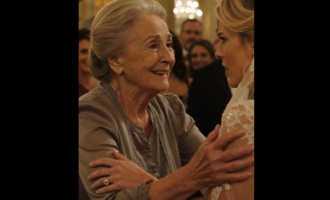
And after years of being treated like a servant in the place I had bought for her, my mother finally had her home again.
THE HOUSE I BOUGHT FOR MY MOTHER